

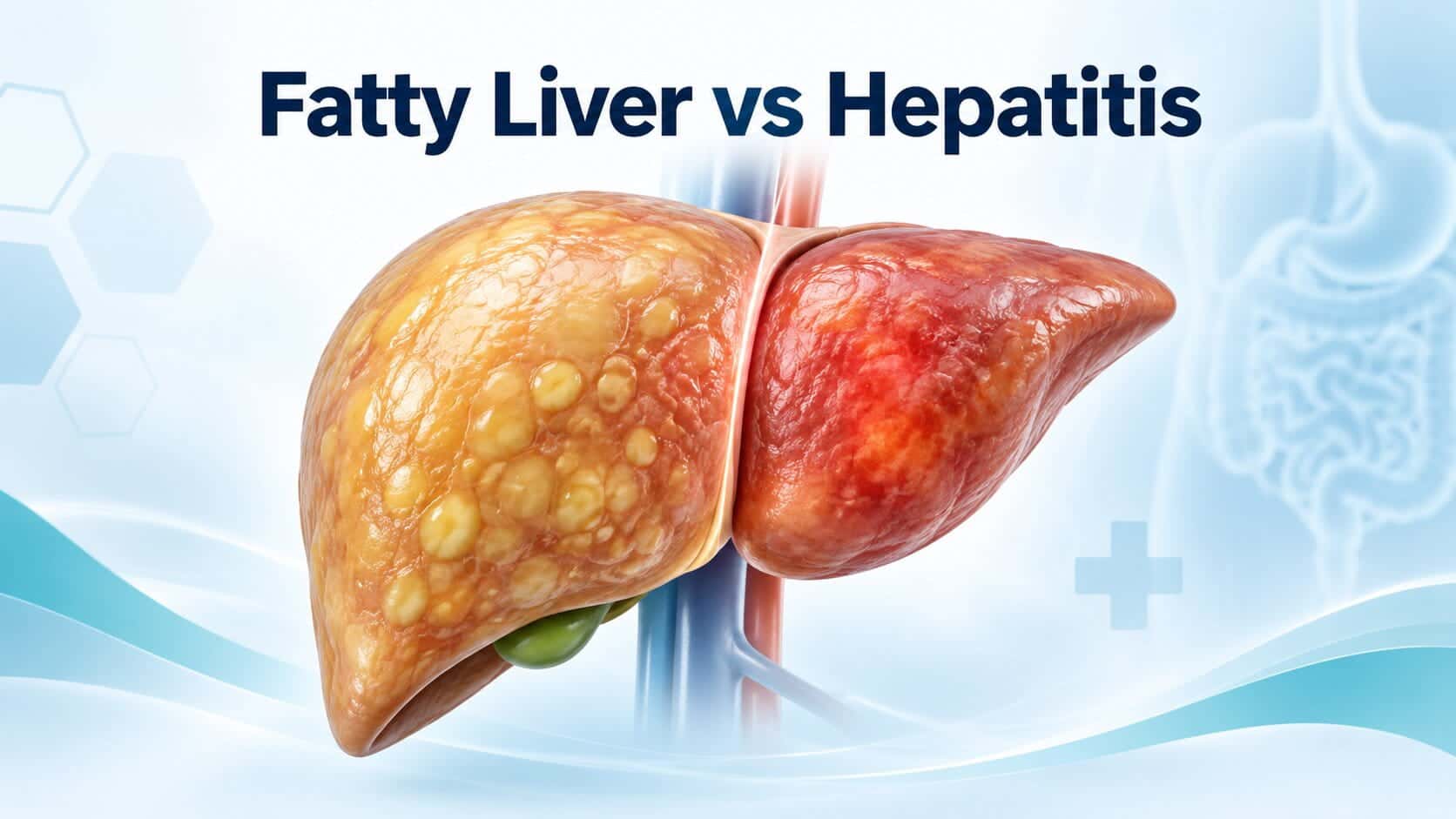
Fatty liver and hepatitis are two different conditions that affect the liver. The main difference between fatty liver and hepatitis is that fatty liver involves excessive fat accumulating inside the liver, while hepatitis means inflammation of the liver.
Fatty liver is commonly associated with obesity, diabetes, metabolic problems or excessive alcohol consumption. Hepatitis can be caused by viruses, alcohol, certain medicines, toxins or an autoimmune condition.
Both conditions can develop without producing obvious symptoms. If they are not properly managed, they may cause liver scarring, cirrhosis and other serious complications. Understanding their differences can help people recognise potential risks and seek an accurate diagnosis.
Understanding Fatty Liver Disease
Fatty liver disease develops when an excessive amount of fat accumulates inside liver cells. A small amount of fat may not cause immediate harm, but continued accumulation can eventually result in inflammation, scarring and reduced liver function.
The condition previously known as non-alcoholic fatty liver disease, or NAFLD, is now also called metabolic dysfunction-associated steatotic liver disease (MASLD). It is frequently associated with obesity, insulin resistance, type 2 diabetes, high blood pressure and unhealthy cholesterol levels.
Fat accumulation caused by excessive alcohol consumption is known as alcohol-related fatty liver disease.
Common risk factors for fatty liver include:
- Being overweight or obese
- Type 2 diabetes
- Insulin resistance
- High cholesterol or triglycerides
- High blood pressure
- Metabolic syndrome
- Lack of regular physical activity
- An unhealthy diet
- Excessive alcohol consumption
- Certain medicines or medical conditions
People who do not consume alcohol can still develop fatty liver. The condition is often identified during routine blood tests or an abdominal ultrasound because it may not produce symptoms in its early stages.
Understanding Hepatitis
Hepatitis is an inflammation of the liver. It is not a singular illness and can arise for a variety of reasons.
The viruses known as hepatitis A, B, C, D, and E cause viral hepatitis. Excessive alcohol use, some medications, hazardous materials, or an autoimmune disease where the immune system unintentionally targets liver cells can all induce liver inflammation.
Hepatitis can be acute or chronic. Acute hepatitis develops suddenly and usually lasts for a limited period. Chronic hepatitis continues for several months or years and may gradually damage the liver.
The main forms include:
- Hepatitis A: Usually transmitted by tainted food or water.
- Hepatitis B can be transmitted from mother to child during childbirth or through contaminated blood and bodily fluids.
- Hepatitis C: Mostly transmitted by coming into touch with contaminated blood.
- Hepatitis D: Only impacts those who already have hepatitis B.
- Hepatitis E: Commonly spreads through contaminated water.
- Autoimmune hepatitis: Happens when the liver is attacked by the immune system.
- Alcohol-related hepatitis: Results from inflammation associated with excessive alcohol consumption.
- Drug-induced hepatitis: May be caused by certain medicines, supplements or toxins.
Not every form of hepatitis is contagious. Some types of viral hepatitis can spread between people, but autoimmune, alcohol-related and drug-induced hepatitis cannot.
Fatty Liver vs Hepatitis: Key Differences
|
|
|
|
|
|
|
|
|
|
|
|
|
|
|
|
|
|
|
|
|
|
|
|
|
|
|
|
|
|
|
|
In simple terms, fatty liver describes fat accumulation, whereas hepatitis describes liver inflammation. However, fatty liver can cause inflammation when it progresses.
Symptoms and Warning Signs
Fatty liver and hepatitis may both remain silent during their early stages. Some patients only learn that they have a liver problem after receiving abnormal blood test results or undergoing imaging for another reason.
Possible symptoms of fatty liver include:
- Persistent tiredness
- General weakness
- Discomfort under the right ribs
- Reduced appetite
- Unexplained weight changes
Hepatitis may cause:
- Fever
- Fatigue
- Loss of appetite
- Nausea or vomiting
- Upper-right abdominal pain
- Joint pain
- Dark-coloured urine
- Pale stools
- Yellowing of the skin or eyes
- Itchy skin
Advanced liver damage may cause abdominal swelling, swollen legs, easy bruising, confusion, vomiting blood or black stools. These symptoms require urgent medical attention.
The symptoms of fatty liver and hepatitis can overlap. Therefore, symptoms alone cannot identify the condition, and proper medical testing is necessary.
The Connection Between Fatty Liver and Hepatitis
Fatty liver does not turn into viral hepatitis. Nevertheless, excessive fat inside the liver can trigger inflammation and liver-cell damage.
When metabolic fatty liver causes inflammation, it is called metabolic dysfunction-associated steatohepatitis (MASH). This condition was previously known as non-alcoholic steatohepatitis or NASH.
MASH may gradually lead to fibrosis, which means scarring of the liver. Severe fibrosis can progress to cirrhosis and affect the liver’s ability to function normally.
It is also possible to have fatty liver and another type of hepatitis simultaneously. For example, a person may have metabolic fatty liver disease alongside hepatitis B or C. Having more than one liver condition may increase the likelihood of progressive liver damage.
Diagnosis and Medical Tests
Doctors consider the patient’s symptoms, medical history, alcohol consumption, medicine use and existing health conditions before recommending appropriate tests.
Tests used to investigate fatty liver may include:
- Liver function tests
- Blood sugar or HbA1c
- Cholesterol and triglyceride tests
- Abdominal ultrasound
- Liver elastography or FibroScan
- CT or MRI in selected cases
- Liver biopsy when necessary
Ultrasound can identify fat accumulation, while elastography helps assess liver stiffness and possible scarring.
Tests for hepatitis may include:
- Liver function tests
- Hepatitis A, B and C screening
- Viral load testing
- Autoimmune antibody tests
- Abdominal ultrasound
- Liver elastography
- Liver biopsy in selected cases
Abnormal liver function test results cannot identify the exact condition on their own. Additional blood tests and imaging may be necessary to differentiate between fatty liver and hepatitis.
Treatment and Prevention
Fatty liver treatment usually focuses on reducing liver fat and controlling the conditions contributing to it. A doctor may recommend gradual weight loss, regular physical activity, a balanced diet and improved management of blood sugar, cholesterol and blood pressure.
Avoiding or limiting alcohol may also be advised. Patients should not use unprescribed “liver detox” remedies because certain herbal products and supplements may cause additional liver damage.
Hepatitis treatment depends on its cause. Hepatitis A and many cases of hepatitis E may require supportive care and monitoring. Chronic hepatitis B may require antiviral treatment and regular liver assessment. Hepatitis C can often be treated successfully with direct-acting antiviral medicines.
Autoimmune hepatitis may require medicines that suppress the immune system. Alcohol-related hepatitis requires stopping alcohol and receiving appropriate medical support. Suspected drug-induced hepatitis must be evaluated by a doctor. Patients should never stop prescribed medication without medical advice.
People can reduce their risk of liver disease by maintaining a healthy weight, exercising regularly, controlling diabetes, avoiding excessive alcohol and using medicines responsibly. Hepatitis A and B vaccination may also be recommended for certain individuals.
Frequently Asked Questions
Is fatty liver the same as hepatitis?
No. Fatty liver means excessive fat has accumulated inside the liver, whereas hepatitis means the liver is inflamed. Fatty liver can eventually cause inflammation, but it is not the same as viral hepatitis.
Is fatty liver contagious?
No. Fatty liver cannot spread between people. Certain forms of viral hepatitis can spread through contaminated food, water, blood or body fluids.
Can an ultrasound differentiate between fatty liver and hepatitis?
An ultrasound can often identify liver fat and certain structural changes. However, it may not reveal the exact cause of liver inflammation. Blood tests and other investigations may also be required.
Can fatty liver be reversed?
Early fatty liver may improve through medically supervised weight loss, physical activity, a balanced diet and better control of diabetes and cholesterol. Advanced liver scarring may be more difficult to reverse.
Can hepatitis be cured?
The outcome depends on the type. Hepatitis C can often be cured with antiviral medicines. Hepatitis B can usually be controlled but may require long-term monitoring. Hepatitis A commonly resolves without becoming chronic.
Can fatty liver and hepatitis occur together?
Yes. A person can have fatty liver alongside viral, autoimmune or alcohol-related hepatitis. Combined liver conditions require careful medical evaluation and monitoring.
Which doctor treats these liver conditions?
A gastroenterologist or hepatologist diagnoses and manages fatty liver, hepatitis and other liver diseases.

Liver Care at IMC Hospital Lahore
Fatty liver and hepatitis affect the same organ, but their causes and treatment approaches are different. An accurate diagnosis is essential for choosing appropriate treatment and preventing avoidable liver damage.
IMC Hospital offers gastroenterology, hepatology, laboratory and radiology services for the evaluation and management of liver-related conditions. If you have symptoms, abnormal liver test results or risk factors for liver disease, consult a qualified specialist at IMC Hospital Lahore.