

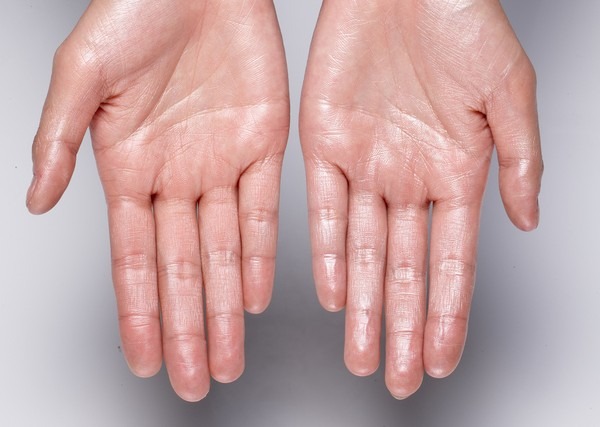
You've probably had the moment. A handshake that leaves the other person's palm visibly damp. A shirt that soaks through by mid-morning, no matter the temperature. A presentation where you're more focused on the sweat dripping off your fingertips than the slides behind you.
If that sounds familiar, you're not "just a sweaty person." You may have hyperhidrosis a real, diagnosable medical condition, not a hygiene issue or a willpower problem. It affects roughly 5% of people to a clinically significant degree, and when milder forms are included, some population surveys put the number closer to one in six or seven adults. Despite that, most people go years without a diagnosis, partly because they assume nothing can be done, and partly because "I sweat a lot" doesn't sound like something a doctor needs to hear.
This guide breaks down exactly what hyperhidrosis is, the specific symptoms that separate it from normal sweating, and the causes behind both its primary and secondary forms the distinction that actually determines how it gets treated.
What Is Hyperhidrosis, Exactly?
Hyperhidrosis is sweating that goes beyond what your body needs for temperature regulation. Everyone sweats when it's hot, when they exercise, or when they're nervous. Hyperhidrosis is different: the sweating happens regardless of temperature, activity level, or emotional state, and it's often heavy enough to disrupt daily life, soaking through clothes, making it hard to hold a pen or a phone, or causing you to change shirts two or three times a day.
Doctors split it into two categories, and the split matters because it changes everything about diagnosis and treatment:
- Primary (focal) hyperhidrosis: sweating concentrated in specific areas (usually the underarms, palms, soles, or face/scalp), with no underlying medical cause.
- Secondary (generalized) hyperhidrosis: sweating over larger areas of the body, triggered by an underlying condition, medication, or other identifiable cause.
Primary Hyperhidrosis: Symptoms and Recognized Patterns
Primary hyperhidrosis is the more common form, and it has a fairly consistent clinical fingerprint. Dermatology literature generally describes it as sweating that:
- Is focal concentrated in one or a few specific areas rather than the whole body
- Is bilateral and roughly symmetrical (both palms, both underarms, both feet not just one side)
- Occurs at least once a week
- Started before age 25, often in the teenage years
- Happens during sleep rarely or not at all (this is a key differentiator secondary hyperhidrosis often continues at night)
- Runs in families a genetic link shows up in roughly a third to two-thirds of documented cases
- Interferes with daily activities, work, or social interaction
The most commonly affected sites are the armpits (30–60% of cases), followed by palms and soles (10–40% each), and the face or scalp (10–20%). Many people have more than one site affected at once; it's common for someone with sweaty palms to also deal with sweaty feet.
The underlying mechanism isn't fully understood, but the leading explanation is that the sympathetic nervous system, the part of your body that controls "fight or flight" responses is overactive in the nerves controlling sweat glands in these specific regions. The sweat glands themselves are structurally normal; they're just being told to work overtime.
Secondary Hyperhidrosis: Symptoms and Recognized Patterns
Secondary hyperhidrosis behaves differently, and recognizing the difference is genuinely useful, because it's the signal that tells you (or a doctor) to look for an underlying cause rather than treating the sweating in isolation. Watch for:
- Sweating over large areas of the body, or the whole body, rather than specific spots
- Sweating that happens during sleep
- A later onset appearing in adulthood rather than adolescence
- Asymmetrical sweating (more on one side than the other)
- Sweating accompanied by other symptoms: unexplained weight loss, fever, rapid heartbeat, or fatigue
Any of those last few points, especially in combination, is a reason to see a doctor rather than a dermatologist alone they can point to something happening elsewhere in the body.
What Causes Hyperhidrosis?
Causes of Primary Hyperhidrosis
The honest answer is that the exact cause is still not fully understood. What research does point to:
- Overactive sympathetic nerve signaling to eccrine (sweat) glands, without any structural abnormality in the glands themselves
- Genetics, family history is common, and researchers have investigated specific gene loci associated with the condition, though no single "hyperhidrosis gene" has been isolated
- Onset typically in adolescence, suggesting a developmental or hormonal component, though this isn't fully mapped out either
Causes of Secondary Hyperhidrosis
This is the category where "cause" is much easier to pin down, because secondary hyperhidrosis is, by definition, sweating driven by something else going on in the body. Recognized causes include:
- Endocrine and metabolic conditions, hyperthyroidism, diabetes (particularly with low blood sugar episodes), obesity, and menopause are among the most common
- Neurological conditions, including autonomic nervous system disorders and, in rarer cases, effects following stroke or spinal cord injury
- Infections, chronic infections such as tuberculosis have long been associated with generalized sweating
- Cancers, certain tumors, including lymphomas and pheochromocytoma (a tumor of the adrenal gland), can cause sweating as a symptom
- Medications, antidepressants, certain diabetes medications, some pain relievers, and other drug classes are well-documented triggers
- Pregnancy and hormonal shifts, which can bring on temporary generalized sweating
- Anxiety and psychiatric conditions, which can both trigger sweating episodes directly and worsen existing hyperhidrosis
This is also why doctors generally won't just prescribe an antiperspirant and move on if the pattern doesn't fit primary hyperhidrosis. Ruling out these causes is part of a proper workup.

Why Diagnosis (Not Just Symptom Management) Matters
It's tempting to treat excessive sweating purely as a cosmetic or comfort issue and reach for a stronger antiperspirant. For many people with primary hyperhidrosis, that's a reasonable starting point. But because the symptom pattern is the main clue that separates primary from secondary hyperhidrosis, getting an accurate read on your own pattern, where it happens, when it started, whether it happens at night, whether both sides are affected equally, is what allows a doctor to either rule out something more serious or move straight into effective, targeted treatment.
Quality of life is also not a minor detail here. Population studies consistently find that close to half of people with hyperhidrosis report it meaningfully affects their psychological wellbeing, social life, or work performance on par with or worse than conditions like acne or psoriasis in terms of self-reported impact. It's a real condition with real consequences, not something to just "deal with."
The Bottom Line
Hyperhidrosis isn't a hygiene failure or an overreaction to stress, it's a distinct medical condition with two clearly defined categories, each with its own recognizable symptom pattern and set of underlying causes. If your sweating is focal, symmetrical, started young, and eases up at night, you're likely looking at primary hyperhidrosis. If it's widespread, one-sided, started later in life, or shows up while you sleep, it's worth ruling out an underlying cause with a doctor. Either way, effective treatments exist, but the right one starts with correctly identifying which type you're dealing with.

When Should You See a Doctor?
A healthcare professional should be consulted if you encounter:
- Frequent urination
- Excessive thirst
- Unexplained weight loss
- Constant fatigue
- Blurred vision
- Recurring yeast infections or UTIs
- Slow-healing wounds
- Tingling or numbness in your hands or feet
Early diagnosis can help prevent serious complications and improve long-term health outcomes. A simple blood test can determine whether your blood sugar levels are within a healthy range.
How to Reduce Your Risk of Diabetes
Although some risk factors cannot be changed, many lifestyle modifications can reduce the risk of developing type 2 diabetes:
- Maintain a healthy body weight
- Follow a balanced diet rich in vegetables, fruits, and whole grains
- Exercise regularly
- Limit sugary beverages and processed foods
- Get regular health screenings
- If you are at high risk, keep an eye on your blood sugar levels.
- Follow your doctor's recommendations regarding PCOS or gestational diabetes
Healthy lifestyle habits can delay or even prevent the onset of type 2 diabetes in many individuals.
Frequently Asked Questions (FAQs)
Is hyperhidrosis a serious medical condition?
Primary hyperhidrosis isn't dangerous on its own, but it can significantly affect quality of life, confidence, and daily function. Secondary hyperhidrosis can be a sign of an underlying condition that does need medical attention, which is why identifying the type matters.
What's the difference between hyperhidrosis and just sweating a lot?
Normal sweating responds to heat, exercise, or stress and eases off once the trigger passes. Hyperhidrosis happens regardless of temperature or activity, is often heavy enough to soak through clothing, and recurs at least weekly.
Can hyperhidrosis start suddenly in adulthood?
Primary hyperhidrosis almost always begins before age 25. Sweating that starts suddenly in adulthood is more characteristic of secondary hyperhidrosis and warrants a medical evaluation to check for an underlying cause.
Does hyperhidrosis run in families?
Yes, for the primary form. Family history shows up in a significant share of documented cases, though the exact genetic mechanism isn't fully mapped.
Can anxiety cause hyperhidrosis?
Anxiety can trigger sweating episodes and worsen existing hyperhidrosis, but primary hyperhidrosis itself isn't caused by anxiety; the sweating happens independent of emotional state, which is one way doctors distinguish it from purely stress-driven sweating.
Which body parts does hyperhidrosis usually affect?
Primary hyperhidrosis most commonly affects the underarms, followed by the palms, soles, and face or scalp. Secondary hyperhidrosis tends to be more widespread, sometimes affecting the whole body.
Does hyperhidrosis happen during sleep?
Rarely with primary hyperhidrosis night sweats are actually a red flag pointing toward a secondary cause that should be checked by a doctor.
Is excessive sweating linked to any diseases?
It can be. Conditions associated with secondary hyperhidrosis include hyperthyroidism, diabetes, certain infections, some cancers, and menopause, along with side effects from specific medications.
How common is hyperhidrosis really?
Primary hyperhidrosis affects an estimated 2–5% of people to a clinically significant degree, with some broader surveys reporting higher rates when milder or self-reported sweating is included.
Should I see a doctor for excessive sweating?
Yes, especially if the sweating is widespread, one-sided, started in adulthood, happens at night, or comes with other symptoms like unexplained weight loss or a rapid heartbeat. Even primary hyperhidrosis is worth discussing, since effective treatments exist and there's no need to just live with it.

Integrated Medical Care Hospital (IMC Hospital):
The multi-specialty IMC Hospital was established as a joint venture with DHA Lahore with the intention of revolutionizing healthcare and introducing the concept of completely integrated treatment and services. By combining methods and practices for patient management and putting people before illness, IMC overcomes the inherent difficulties of inpatient care. IMC provides a digital platform that integrates many healthcare service components to transform the way healthcare services are provided. Visit the Integrated Medical Care Hospital (IMC Hospital) and schedule a consultation.