

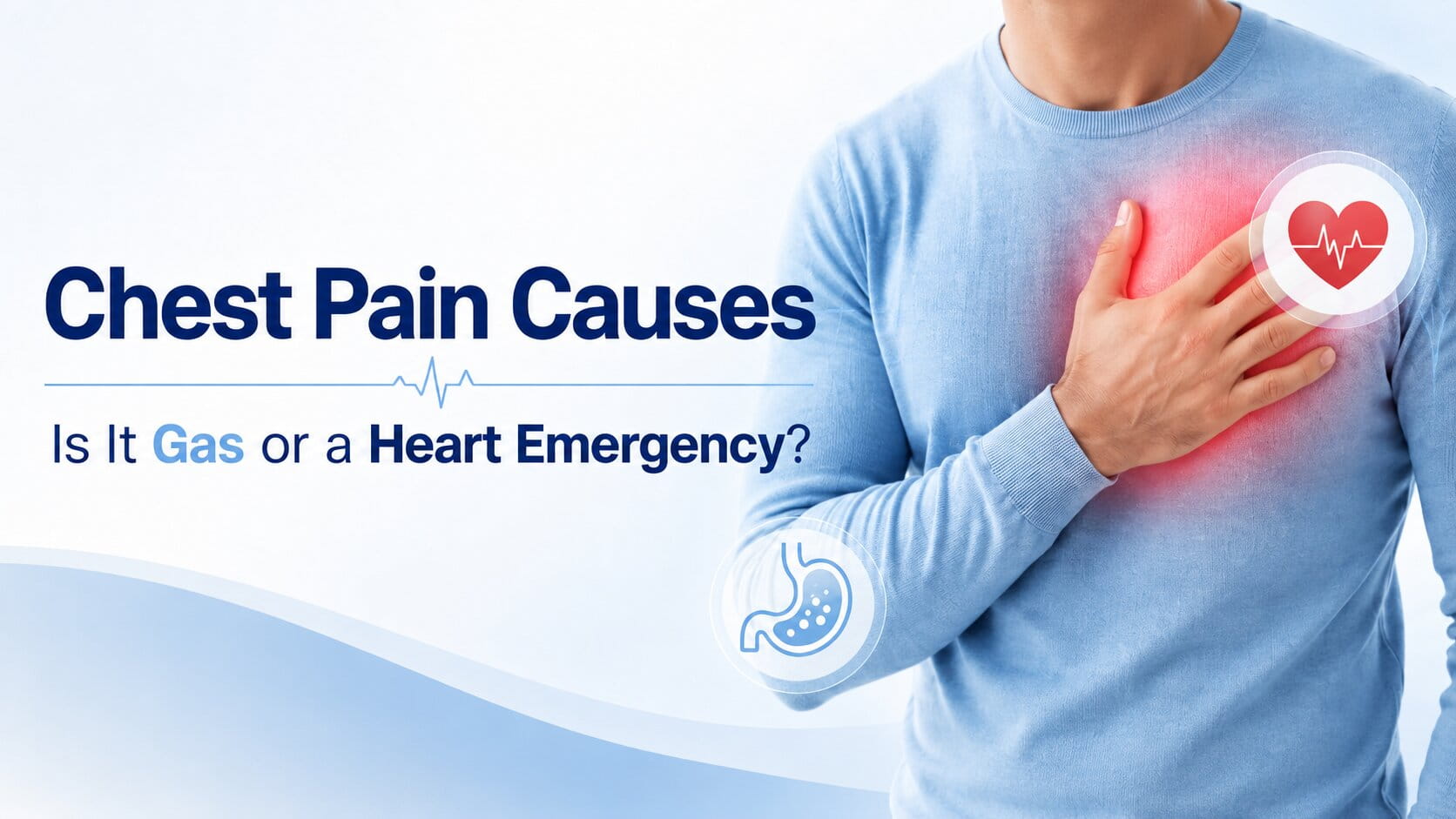
It might be worrisome to experience chest pain, especially if you don't know if it's due to acidity, gas, or a cardiac issue.
Although digestive problems commonly cause burning or discomfort in the chest, heart-related pain can sometimes feel like indigestion. Because the symptoms may overlap, it is not always possible to identify the cause at home.
Never disregard chest pain that is sudden, severe, persistent, or inexplicable. If the pain feels like pressure or squeezing, spreads to another part of the body, or occurs with sweating, breathlessness, nausea, or dizziness, seek emergency medical care immediately.
When Is Chest Pain a Medical Emergency?
Seek immediate medical assistance if chest pain:
- Feels like pressure, heaviness, squeezing, fullness, or tightness
- Lasts more than a few minutes
- Goes away and then returns
- Spreads to the arm, shoulder, back, neck, jaw, teeth, or upper abdomen
- Occurs with shortness of breath
- Is accompanied by cold sweating, nausea, vomiting, dizziness, or fainting
- Begins during physical activity or emotional stress
- Is sudden, severe, or different from pain you have experienced before
These symptoms may indicate a heart attack or another serious condition involving the heart, lungs, or major blood vessels. Don't put off getting help until the pain gets too bad. Some heart attacks begin gradually with mild discomfort rather than sudden, intense pain.
What Does Heart-Related Chest Pain Feel Like?
Heart-related chest pain is commonly associated with reduced blood flow to the heart muscle. It may occur because of angina, a heart attack, or another cardiovascular condition.
Patients may describe the sensation as:
- Pressure on the chest
- A heavy weight sitting on the chest
- Tightness or squeezing
- Burning or aching
- Fullness in the center of the chest
One or both arms, the shoulders, upper back, neck, jaw, teeth, or upper abdomen may become uncomfortable. Shortness of breath, unusual fatigue, nausea, cold sweats, dizziness, or an irregular heartbeat are further potential symptoms.
Can a Heart Attack Feel Like Gas or Indigestion?
Yes. A heart attack may sometimes feel like heartburn, acidity, gas, or indigestion. This overlap is one reason why patients should not rely on symptoms alone to rule out a heart problem.
Feeling temporary relief after burping, changing position, or taking an antacid does not reliably prove that the pain is harmless. Anyone experiencing new or unexplained chest pain should be assessed by a qualified healthcare professional.
What Does Gas- or Acidity-Related Chest Pain Feel Like?
What many people describe as “gas pain in the chest” is often related to acid reflux, heartburn, bloating, or another digestive problem.
Acid reflux occurs when stomach contents move back into the oesophagus—the tube connecting the mouth to the stomach. This may produce a burning feeling behind the breastbone.
Digestive chest discomfort may be associated with:
- A burning sensation behind the breastbone
- Discomfort after a large, oily, or spicy meal
- An acidic or sour taste in the mouth
- Burping or bloating
- Food or liquid coming back into the throat
- Symptoms that become worse after lying down
- Difficulty or discomfort when swallowing
However, a heart issue is not always ruled out by stomach symptoms. Burning or indigestion are other terms for heart-related chest pain.
Gas Pain vs Heart-Related Chest Pain
The following comparison may help you understand the common patterns, but it should not be used for self-diagnosis.
|
|
|
|
|
|
|
|
|
|
|
|
|
|
|
|
|
|
|
|
|
|
|
|
|
|
|
|
|
|
|
|
Symptoms can vary significantly. A person may experience a heart attack without classic crushing chest pain, while digestive pain may occasionally be intense.
Heart Attack Symptoms in Women
Chest pain or discomfort remains a common heart attack symptom in women, but women may also experience less obvious warning signs.
These may include:
- Shortness of breath
- Nausea or vomiting
- Pain in the upper back, shoulder, arm, neck, or jaw
- Unusual tiredness or weakness
- Dizziness or lightheadedness
- Anxiety
- Upset stomach
- Cold sweating
These symptoms can be mistaken for stress, exhaustion, or indigestion. Women should seek urgent medical care when unexplained symptoms occur suddenly or feel unusual.
Chest Pain in People with Diabetes and Older Adults
Heart attack symptoms may be less noticeable in older adults and people with diabetes. Some patients may experience little chest pain or no chest pain at all.
Instead, they may develop:
- Sudden shortness of breath
- Unexplained weakness
- Severe tiredness
- Nausea
- Dizziness
- Sweating
- Back, arm, neck, or jaw discomfort
This is sometimes described as a silent or atypical heart attack. Unusual breathlessness, weakness, or discomfort should therefore be taken seriously, particularly in people with cardiovascular risk factors.
Other Possible Causes of Chest Pain
Chest pain is not always caused by the heart or digestive system. Other possible causes include:
Muscle or Rib Pain
Muscle strain, injury, or inflammation around the ribs can cause localised pain. It may become worse when moving, twisting, lifting, or pressing the affected area.
Lung Conditions
Pneumonia, inflammation around the lungs, a collapsed lung, or a blood clot in the lungs may cause chest pain. Pain that becomes worse with deep breathing may be related to the lungs, particularly when accompanied by breathlessness, coughing, fever, fainting, or swelling in one leg.
Anxiety or Panic Attacks
Panic attacks may cause chest tightness, rapid breathing, palpitations, sweating, trembling, and dizziness. However, a heart problem should be excluded before assuming that new chest pain is caused by anxiety.
Inflammation Around the Heart
Pericarditis—an inflammation of the protective sac surrounding the heart—may produce sharp chest pain that changes with breathing or body position.
Because some non-cardiac conditions can also be dangerous, persistent or unexplained pain requires proper medical assessment.
Who Has a Higher Risk of Heart Disease?
You may have a greater risk of heart-related chest pain if you:
- Have diabetes
- Have high blood pressure
- Have high cholesterol
- Smoke or use tobacco
- Are overweight or physically inactive
- Have a close family history of heart disease
- Have previously experienced angina, a heart attack, or a stroke
- Are an older adult
Even in the absence of identified risk factors, a heart emergency can still occur. Don't write off worrisome symptoms just because you're young or in generally good health.
What Should You Do During Suspected Heart-Related Chest Pain?
- Stop physical activity and sit or lie down safely.
- Call your local emergency service or ask someone to take you to the nearest emergency department.
- Do not drive yourself unless no safer option is available.
- Don't wait for the discomfort to go away.
- Take prescribed heart medication only according to your doctor’s instructions.
- Do not use home remedies or antacids as a substitute for emergency evaluation.
Emergency medical teams can begin assessment and treatment during transportation, which may save valuable time.
When Should You Book a Cardiology Consultation?
Arrange a medical consultation if you experience:
- Repeated chest discomfort during walking or exercise
- Chest pain that regularly appears during stress
- Unexplained breathlessness
- Frequent palpitations
- Reduced exercise tolerance
- Persistent fatigue
- A personal or family history of heart disease
- High blood pressure, diabetes, or high cholesterol
Even when symptoms are mild, early assessment may help identify cardiovascular risks before a medical emergency develops.
Emergency Cardiac Care at IMC Hospital Lahore
IMC Hospital provides round-the-clock emergency care and cardiac services, including emergency catheterisation when indicated. Its cardiology services include ECG and echocardiography, treadmill stress testing, cardiac CT angiography, coronary angiography, angioplasty, stenting, and management of acute heart attacks.
For a chest pain emergency, contact:
IMC Emergency: +92-325-4624625
Hospital Phone: 042-111-111-462
Address: 153/1, Sector F, Phase 5, DHA, Lahore
Frequently Asked Questions
Can trapped gas cause chest pain?
Digestive problems, including acid reflux, bloating, and oesophageal conditions, can cause chest discomfort. However, chest pain should not automatically be attributed to gas, particularly when it is new, severe, persistent, or associated with other warning signs.
How can I tell whether chest pain is gas or a heart attack?
There is no completely reliable way to distinguish the two at home. Pressure-like pain, spreading discomfort, shortness of breath, sweating, nausea, or dizziness require urgent assessment. When uncertain, treat the symptoms as an emergency.
Can heart pain occur on the right side of the chest?
Yes. Although heart-related discomfort often occurs in the centre or left side of the chest, its location can vary. The position of pain alone cannot confirm or exclude a heart problem.
Does heart attack pain always spread to the left arm?
No. Pain may spread to the left arm, right arm, both arms, shoulders, back, neck, jaw, or upper abdomen. Some patients do not experience spreading pain at all.
Should I wait to see whether chest pain goes away?
Do not wait when chest pain is sudden, severe, unexplained, persistent, or accompanied by breathlessness, sweating, nausea, dizziness, or spreading discomfort. Seek emergency care immediately.