
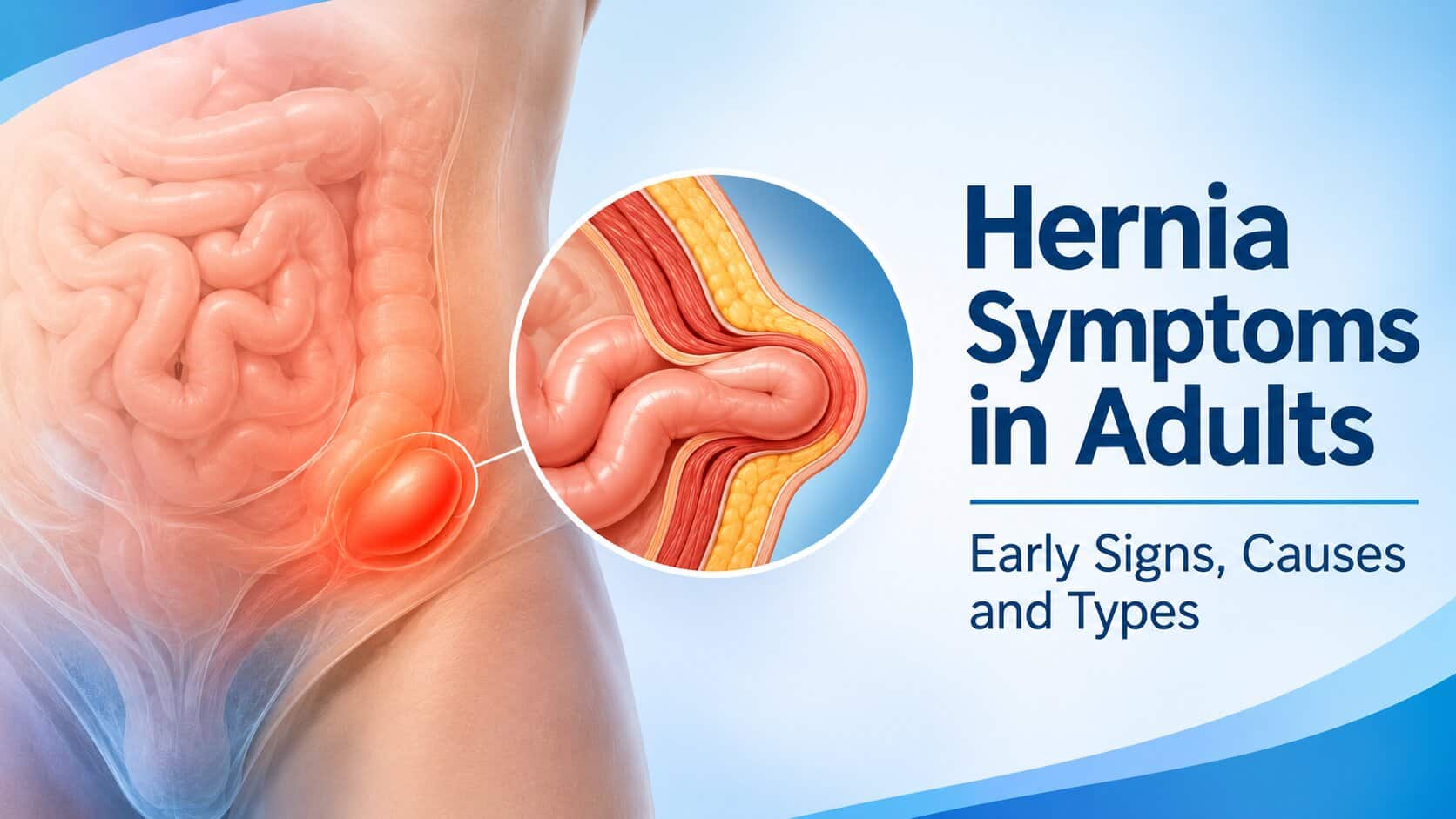
A hernia develops when an internal organ or fatty tissue pushes through a weak area in the surrounding muscle or connective tissue. It frequently manifests as an obvious bulge in the groin, abdomen, or area surrounding the belly button. While some individuals may not detect any symptoms in the early stages, others may feel pain or discomfort.
Recognizing hernia symptoms in adults is important because early identification helps detect the condition and prevent potential complications. Although some hernias cause mild discomfort, others can become serious if the protruding tissue becomes trapped.
What Are the Common Symptoms of a Hernia in Adults?
The most common symptom of a hernia is a noticeable lump or bulge in the affected area. However, symptoms can vary depending on the type, location, and size of the hernia.
Common symptoms include:
- A visible bulge in the abdomen, groin, or near the belly button.
- Discomfort or pain when carrying heavy objects, bending, or coughing.
- A feeling of pressure or heaviness in the abdomen.
- Burning or aching sensations around the affected area.
- Swelling that becomes more noticeable when standing or straining.
- Discomfort that improves when lying down or resting.
Some hernias remain painless, while others gradually become larger or more uncomfortable. Even a painless swelling should be evaluated by a healthcare professional.
What Are the Early Warning Signs of a Hernia?
Early hernia symptoms can sometimes be difficult to recognize. You may initially notice a small lump that appears when standing, coughing, or exercising and becomes less noticeable when lying down.
Other early warning signs include:
- Mild discomfort in the lower abdomen or groin.
- A small swelling near the belly button.
- A dragging or heavy feeling in the groin.
- Pain during physical activity or heavy lifting.
- Increased swelling after prolonged standing.
If you notice these changes, consult a doctor for an examination rather than waiting for the symptoms to worsen.
What Are the Different Types of Hernias in Adults?
Hernias can develop in different parts of the body. The most common types in adults include:
1. Inguinal Hernia
When tissue pushes through a weak place in the lower abdominal wall, an inguinal hernia occurs in the groin region. It is more prevalent in men and can result in swelling, pain, or a protrusion in the groin that occasionally reaches the scrotum.
2. Umbilical Hernia
An umbilical hernia develops around the belly button when fatty tissue or part of the intestine pushes through a weak area near the navel. Adults may notice swelling or discomfort, particularly when coughing or straining.
3. Femoral Hernia
The upper thigh, close to the groin, develops a femoral hernia. It happens when a weak spot close to the femoral canal is pushed through by tissue. Women are more likely to develop femoral hernias, which also carry a higher risk of consequences.
4. Incisional Hernia
An incisional hernia appears close to a prior surgical incision. After surgery, it happens when tissue pushes through a weak spot in the abdominal wall. Standing, coughing, or straining may make the bulge more apparent.
5. Hiatal Hernia
A hiatal hernia happens when a portion of the stomach rises into the chest cavity through a diaphragmatic hole. It might not result in an obvious external protrusion, in contrast to other common abdominal hernias. Some people have heartburn, chest pain, acid reflux, or trouble swallowing.
What Causes Hernias in Adults?
A hernia usually develops because of weakness in the abdominal muscles combined with increased pressure inside the abdomen. Some people are born with muscle weakness, while others develop it over time.
Common causes and risk factors include:
- Heavy lifting: Repeatedly lifting heavy objects can increase pressure on the abdominal muscles.
- Chronic coughing: Frequent coughing can put additional strain on the abdominal wall.
- Constipation: Regular straining during bowel movements increases abdominal pressure.
- Obesity: Excess body weight can place additional stress on abdominal muscles.
- Pregnancy: The abdominal wall is stretched and weakened during pregnancy.
- Prior surgery: Hernias may form in weak spots created by surgical incisions.
- Ageing: Abdominal muscles may become weaker with age.
- Family history: Having close relatives with hernias may increase the likelihood of developing one.
Having these risk factors does not necessarily mean you will develop a hernia, but they can increase the likelihood.
Can a Hernia Cause Serious Health Problems?
Yes. Although some hernias remain manageable, complications can develop when the protruding tissue becomes trapped or its blood supply is interrupted.
Two important complications include:
Incarcerated Hernia: This occurs when the protruding tissue becomes trapped and cannot move back into the abdomen.
Strangulated Hernia: This happens when the blood supply to the trapped tissue is cut off. It can damage the affected tissue and requires emergency medical attention.
Warning Signs That Require Immediate Medical Attention
Seek emergency medical care if you experience:
- Sudden or severe pain around the hernia.
- A bulge that becomes hard, swollen, or cannot move back inside.
- Red, purple, or dark skin around the swelling.
- Nausea or repeated vomiting.
- Abdominal swelling or bloating.
- Difficulty passing stool or gas.
- Fever along with hernia-related pain.
These symptoms may indicate a serious complication. Do not wait for them to improve on their own.
How Is Hernia Diagnosed?
A doctor can often identify a hernia through a physical examination and medical history.
During the examination, the doctor may:
- Check for swelling around the abdomen, groin, or belly button.
- Ask you to stand or cough to observe changes in the bulge.
- Assess pain, tenderness, and the size of the affected area.
- Recommend an ultrasound or CT scan if further investigation is needed.
The diagnostic approach depends on the suspected hernia type and the patient's symptoms.
When Should You See a Doctor for Hernia Symptoms?
You should consult a doctor if you notice a new lump or swelling around your abdomen, groin, or belly button, even if it does not cause pain.
Medical evaluation is particularly important if:
- The bulge is becoming larger.
- You experience repeated abdominal or groin discomfort.
- Pain increases during physical activity.
- The swelling affects your daily activities.
- You notice new digestive symptoms or persistent discomfort.
Early medical assessment helps identify the type of hernia and determine whether it requires further attention.

Hernia Evaluation at IMC Hospital Lahore
Integrated Medical Care (IMC) Hospital, Lahore, provides access to surgical specialties, including general surgery. Adults experiencing abdominal swelling, groin discomfort, or other possible hernia symptoms can seek medical evaluation to understand their condition.
Consulting a qualified general surgeon can help identify the type of hernia, assess its severity, and determine the appropriate next steps.
Visit IMC Hospital to learn more about its medical services and consultation options.
Frequently Asked Questions About Hernia Symptoms in Adults
1. What is the first sign of a hernia in adults?
The first sign is often a small bulge around the abdomen, groin, or belly button. It may become more visible when coughing, standing, or lifting heavy objects.
2. Can a hernia occur without pain?
Yes. Some hernias do not cause pain, especially during the early stages. However, a painless bulge should still be checked by a doctor.
3. Can women develop hernias?
Yes. Women can develop inguinal, femoral, umbilical, and incisional hernias. A bulge or persistent discomfort around the groin or abdomen should be medically evaluated.
4. What happens if a hernia is left untreated?
An untreated hernia may become larger or more uncomfortable. In some cases, it can become trapped or strangulated, requiring emergency medical attention.
5. Can heavy lifting cause a hernia?
Heavy lifting can increase pressure inside the abdomen and contribute to a hernia, particularly when abdominal muscles are already weak.
6. Which doctor diagnoses a hernia?
A general surgeon typically evaluates hernias. The doctor may perform a physical examination and recommend imaging tests when necessary.
7. When does a hernia become an emergency?
A hernia may become an emergency if it causes sudden severe pain, vomiting, abdominal swelling, or a hard, discoloured bulge that cannot move back inside. Seek emergency medical care immediately.