

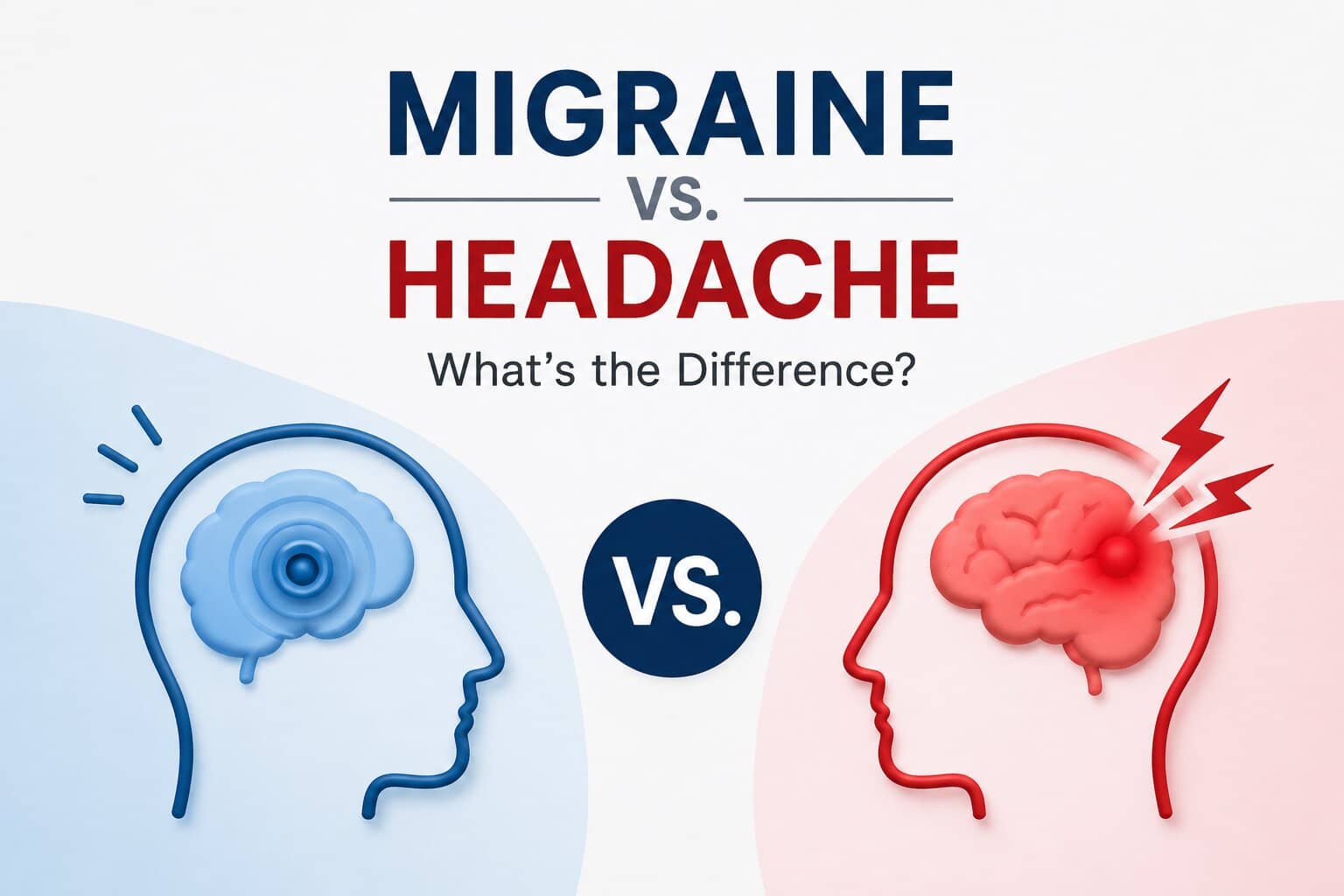
Many people use the words “headache” and “migraine” interchangeably, but they are not the same. A headache can occur due to stress, dehydration, lack of sleep, or other common triggers. A migraine, however, involves changes in the nervous system and often comes with symptoms beyond head pain.
Understanding the difference between migraine and headache can help patients recognize warning signs, choose appropriate treatment, and know when professional medical advice is needed.
What Is a Headache?
A headache is a common condition that causes pain, pressure, or discomfort in the head, scalp, or neck area. It can occur due to various factors such as stress, dehydration, lack of sleep, muscle tension, illness, or lifestyle changes. Unlike migraine, a typical headache usually does not involve neurological symptoms and may range from mild to moderate discomfort.
Common Types of Headaches
1. Tension Headache
- Pressure-like pain
- Tight band sensation around the head
- Often related to stress or muscle tension
2. Cluster Headache
- Severe pain around one eye
- Occurs in repeated attacks
- May include eye watering or nasal symptoms
3. Sinus Headache
- Facial pressure
- Nasal congestion
- Often linked with sinus problems
What Is a Migraine?
A neurological disorder called migraine produces recurrent bouts of moderate to severe headache pain. Unlike regular headaches, migraines can have multiple accompanying symptoms and frequently interfere with day-to-day activities.

Migraine vs Headache: Main Differences
|
|
|
|
|
|
|
|
|
|
|
|
|
|
|
|
|
|
|
|
|
|
|
|
|
|
|
|
|
|
|
|
|
|
|
|
Migraine Symptoms
Common migraine symptoms include:
- Throbbing or pulsating head pain
- Pain on one side of the head
- Nausea or vomiting
- Sensitivity to light
- Sensitivity to sound
- Blurred vision
- Difficulty concentrating
- Aura symptoms such as flashing lights or visual changes
Common Migraine Triggers
Migraine attacks can be triggered by different factors, including:
Stress
Anxiety and emotional stress are frequent causes of migraines.
Poor Sleep
Too little or irregular sleep may increase migraine frequency.
Dehydration
Headaches and migraines can be exacerbated by dehydration.
Certain Foods
Some people experience migraines after consuming specific foods.
Weather Changes
Changes in temperature, sunlight, or pressure may trigger symptoms in some individuals.
Can a Headache Turn Into a Migraine?
A normal headache does not usually “turn into” a migraine. Instead, migraine is a separate neurological condition. However, people who experience frequent headaches may sometimes have migraine episodes that were previously misunderstood as ordinary headaches.
When Should You See a Doctor for Headaches?
You should consult a healthcare professional if:
- Headaches are becoming more frequent
- Pain is severe or disabling
- Headaches make it difficult to work, study, or go about daily tasks.
- Pain suddenly becomes the worst headache you have experienced
- Headaches occur after a head injury
- There are neurological symptoms such as weakness, confusion, or vision problems
Migraine and Headache Treatment Options
Treatment depends on the type, severity, and frequency of headaches.
Possible approaches include:
Lifestyle Changes
- Maintaining regular sleep
- Staying hydrated
- Managing stress
- Avoiding known triggers
Medicines
Doctors may recommend medications for:
- Relief during attacks
- Preventing frequent migraines
Specialist Care
Patients with recurring migraines or complicated headaches may benefit from evaluation by a neurologist.
Migraine vs Headache: Frequently Asked Questions (FAQ)
Is migraine worse than a normal headache?
Yes, migraines are usually more intense and often include additional symptoms such as nausea and sensitivity to light or sound.
How do I know if my headache is a migraine?
A migraine is more likely if your headache is severe, throbbing, lasts several hours, and is accompanied by nausea or light sensitivity.
Can stress cause migraines?
Yes, stress is one of the commonly reported migraine triggers.
Should I see a neurologist for migraines?
If migraines are frequent, severe, or affecting your quality of life, consulting a neurologist can help identify appropriate treatment.
Are migraines curable?
There is currently no guaranteed permanent cure for migraines, but proper treatment can significantly reduce symptoms and frequency.

Migraine and Headache Treatment at IMC Hospital Lahore
If you experience frequent headaches, severe migraine attacks, or symptoms affecting your daily life, professional evaluation can help identify the underlying cause and appropriate treatment options.
IMC Hospital provides neurological consultation and management for conditions including migraine and headache disorders through experienced specialists.